🚚 Free Worldwide Shipping on All Orders!Shop Now

$60.00
How Images Mean: Iconography and Meta-Iconography—
$60.00
The Story
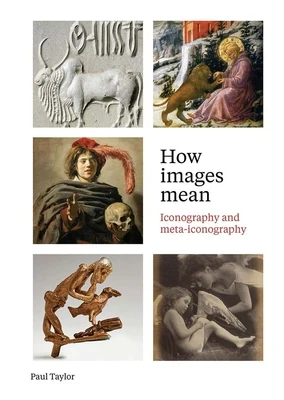
This groundbreaking study interrogates a rich and diverse repertoire of images from all over the world to answer the fundamental question: how are the meanings of images conveyed, recognized and accepted?
Combining art history, anthropology, philosophy and linguistics, this book expands the field of traditional iconography, which explains what images mean, by introducing new, useful categories that enable us to understand how images mean (meta-iconography). In his study of iconography from a century ago, Erwin Panofsky famously discussed what an "Australian bushman" might make of Leonardo's Last Supper: though unaware of the religious story, the Aboriginal viewer would have known it was a picture of humans eating a meal together. Paul Taylor's book argues that this gets the question the wrong way around. We know the painting depicts people at supper only if we know it represents a supper. It is through knowing the cultural context that we can interpret the contents of an image. Universal in scope and profoundly topical at a time when artificial intelligence is redefining our visual horizon, this book represents a resource for scholars in a variety of fields and a thought-provoking read for all those interested in art. Published by Paul Holberton PublishingAuthor: Paul Taylor
Publisher: Paul Holberton Publishing
Published: 07/29/2025
Pages: 264
Binding Type: Paperback
Weight: 1.70lbs
Size: 9.38h x 6.78w x 0.90d
ISBN: 9781913645885
About the Author
Paul Taylor has been a member of the Warburg Institute since 1991 and is the Curator of its Photographic Collection. An expert on iconography and Dutch art, his publications include Condition: The Ageing of Art (2015), Iconography without Texts (as editor, 2008) and Dutch Flower Painting, 1600-1720 (1995).
Description
This groundbreaking study interrogates a rich and diverse repertoire of images from all over the world to answer the fundamental question: how are the meanings of images conveyed, recognized and accepted?
Combining art history, anthropology, philosophy and linguistics, this book expands the field of traditional iconography, which explains what images mean, by introducing new, useful categories that enable us to understand how images mean (meta-iconography). In his study of iconography from a century ago, Erwin Panofsky famously discussed what an "Australian bushman" might make of Leonardo's Last Supper: though unaware of the religious story, the Aboriginal viewer would have known it was a picture of humans eating a meal together. Paul Taylor's book argues that this gets the question the wrong way around. We know the painting depicts people at supper only if we know it represents a supper. It is through knowing the cultural context that we can interpret the contents of an image. Universal in scope and profoundly topical at a time when artificial intelligence is redefining our visual horizon, this book represents a resource for scholars in a variety of fields and a thought-provoking read for all those interested in art. Published by Paul Holberton PublishingAuthor: Paul Taylor
Publisher: Paul Holberton Publishing
Published: 07/29/2025
Pages: 264
Binding Type: Paperback
Weight: 1.70lbs
Size: 9.38h x 6.78w x 0.90d
ISBN: 9781913645885
About the Author
Paul Taylor has been a member of the Warburg Institute since 1991 and is the Curator of its Photographic Collection. An expert on iconography and Dutch art, his publications include Condition: The Ageing of Art (2015), Iconography without Texts (as editor, 2008) and Dutch Flower Painting, 1600-1720 (1995).