The Story
Humans have long transformed the planet, scratching its surface for stones and ores, planting and harvesting crops, sparking fires for light and heat. But since the dawn of industrialization and especially since 1950, our impact has accelerated sharply. Economic, technological, and demographic changes have driven rapid and ongoing shifts in patterns of pollution, human health, and rising sea levels and temperatures.
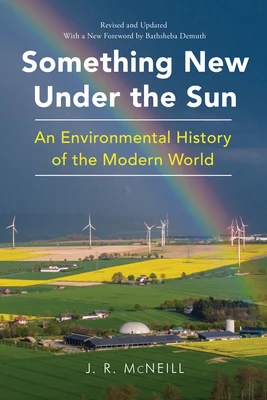
In his landmark publication Something New Under the Sun, acclaimed historian J. R. McNeill offered a new way to understand twentieth-century history: through environmental change. Threading lucid scientific explanations with captivating stories, McNeill's prize-winning history chronicles humanity's deepening imprint on the planet in an evenhanded account that seeks, above all, to explain. With updated data and stories, and new discussions of climate change and climate politics, Something New Under the Sun remains the definitive account of the most urgent topic of our time.
Author: J. R. McNeill
Publisher: W. W. Norton & Company
Published: 04/21/2026
Pages: 480
Binding Type: Paperback
Weight: 0.95lbs
Size: 8.20h x 5.44w x 1.35d
ISBN: 9781324079347
About the Author
McNeill, J. R.: - J. R. McNeill is Distinguished University Professor at Georgetown University. He is the author of award-winning works in world and environmental history. These include The Human Web: A Bird's-Eye View of World History (co-authored with his father and world history pioneer, William H. McNeill) and Something New Under the Sun: An Environmental History of the Twentieth-Century World, both published by Norton. He has served as president of the American Society for Environmental History and the American Historical Association.Demuth, Bathsheba: - Bathsheba Demuth is an environmental historian at Brown University, specializing in the United States and Russia, and in the history of energy and past climates. She has lived in and studied Arctic communities across Eurasia and North America.
Description
Humans have long transformed the planet, scratching its surface for stones and ores, planting and harvesting crops, sparking fires for light and heat. But since the dawn of industrialization and especially since 1950, our impact has accelerated sharply. Economic, technological, and demographic changes have driven rapid and ongoing shifts in patterns of pollution, human health, and rising sea levels and temperatures.
In his landmark publication Something New Under the Sun, acclaimed historian J. R. McNeill offered a new way to understand twentieth-century history: through environmental change. Threading lucid scientific explanations with captivating stories, McNeill's prize-winning history chronicles humanity's deepening imprint on the planet in an evenhanded account that seeks, above all, to explain. With updated data and stories, and new discussions of climate change and climate politics, Something New Under the Sun remains the definitive account of the most urgent topic of our time.
Author: J. R. McNeill
Publisher: W. W. Norton & Company
Published: 04/21/2026
Pages: 480
Binding Type: Paperback
Weight: 0.95lbs
Size: 8.20h x 5.44w x 1.35d
ISBN: 9781324079347
About the Author
McNeill, J. R.: - J. R. McNeill is Distinguished University Professor at Georgetown University. He is the author of award-winning works in world and environmental history. These include The Human Web: A Bird's-Eye View of World History (co-authored with his father and world history pioneer, William H. McNeill) and Something New Under the Sun: An Environmental History of the Twentieth-Century World, both published by Norton. He has served as president of the American Society for Environmental History and the American Historical Association.Demuth, Bathsheba: - Bathsheba Demuth is an environmental historian at Brown University, specializing in the United States and Russia, and in the history of energy and past climates. She has lived in and studied Arctic communities across Eurasia and North America.